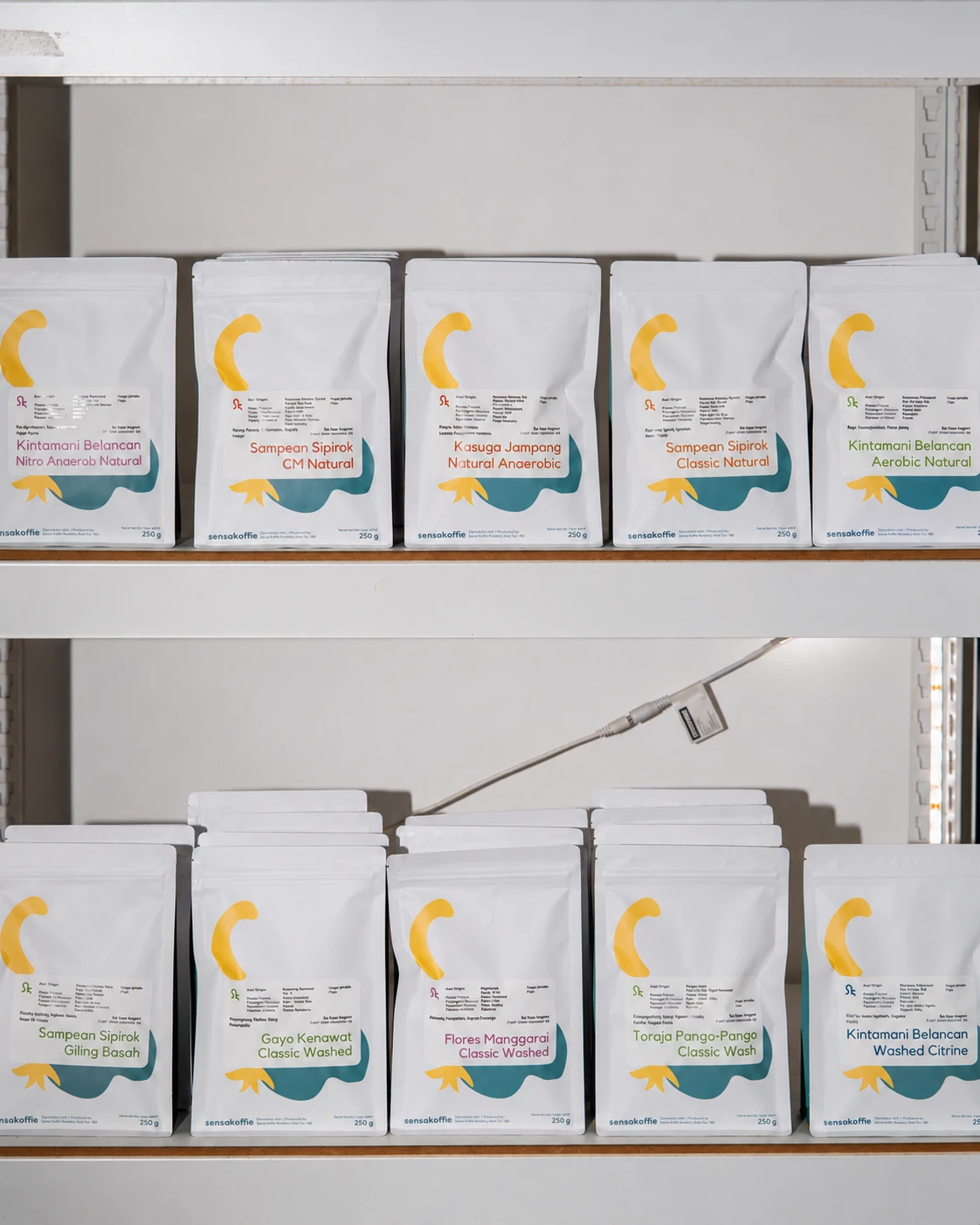
Single-origin coffee comes from one identified place. That might mean a country, a growing region, a producer group within one area, or one farm. A regional single origin can include coffee from several farms. The scope of “origin” varies between sellers, so look for the specific source on the bag.
At sensakoffie, names such as Sampean Sipirok and Kintamani Belancan identify where the coffee was grown. We roast these coffees in Bali. Their growing origins are spread across Indonesia.
How Is Single Origin Different from a Blend?
A blend combines two or more coffees to create a particular flavour profile. A roaster might bring together coffees from different growing regions to achieve the taste they want.
For example, our Denpasar Blend brings together coffees from Java and Takengon (in Aceh). Its name identifies the blend; the label lists its growing origins separately.
Washed Citrine
Both categories can make an enjoyable cup. Choosing between them comes down to your taste preferences. The single-origin label alone cannot tell you how much you will enjoy a coffee.
Read the Label in Four Parts
Take our Kintamani Belancan Washed Citrine. Explore the four fields on its actual label:
Where was it grown?
Belancan, Kintamani
Bangli, Bali. This names a growing area, though it does not identify an individual farm.
How was it processed?
Washed Citrine
In washed processing, the fruit skin, pulp, and mucilage are removed before the beans dry. In natural processing, whole coffee cherries are dried first. These methods describe handling after harvest.
How is it intended to be brewed?
Filter roast
Check the roast profile alongside the origin when choosing coffee for your brewing equipment.
What flavours does it suggest?
Juicy, yellow pear, sugar cane
Tasting notes describe flavour, aroma, and mouthfeel using familiar references. They are separate from an ingredient list. Your brew may give you a different impression.
Origin is one part of the picture. The process and roast also help explain why coffees can taste different.
Choose for the Way You Drink Coffee
If you enjoy black filter coffee and want to explore fruit-like flavours, Kintamani Belancan Washed Citrine is one option to consider. For another label example, look at Sampean Sipirok Classic Natural. Its label names Sampean Village in Sipirok, South Tapanuli, and lists pink guava and stone fruit notes with a filter roast.
Use those descriptions to choose a direction that appeals to you. You may notice different flavours in your own brew.
If you usually drink coffee with milk, our Denpasar Blend is one option for brewing espresso. Its medium-dark roast label describes a creamy dark-chocolate character with milk. Single-origin coffees can also be enjoyed with milk; ask about the particular coffee and roast you are considering.
If you dislike sharp acidity, tell us that when asking for a recommendation. An origin name alone gives too little information to predict how acidic your cup will taste.
Start with a Small Comparison
Choose a bag of at least 250 g within your budget and use a brewing method you already know. When possible, brew two different coffees the same way. Serve both and taste them in turn to compare their flavours. Notice which you prefer and describe it in everyday words: sweeter, fruitier, more bitter, or fuller in the mouth.
For a simple exercise, try our beginner’s guide to cup tasting. If you would rather explore with us, ask about a cupping session at Sensa.
Ready to choose? Browse our single-origin coffees and compare their labels with how you like to drink your coffee.